
Project Facts
Client: GIZ
Country: Bangladesh
Sector: Marine Information & Environmental Management
Project Period: 2025–2026
Services Provided
- Stakeholder consultation and information management
- Marine information collection, review and organization
- Information architecture and content structuring
- Website design and development
- Frontend and backend development
- Dynamic content management
- Search and information discovery
- Contributor and moderation workflow
- Responsive web development
- User testing and deployment
Developed Platform
Marine Information Hub (MIH)
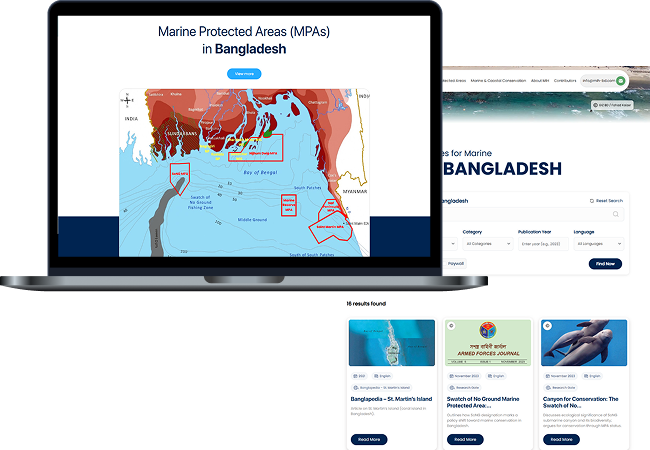
A central web hub for organizing and discovering marine-related information, including documents, maps, publications, datasets and other resources. The hub provides a single starting point for access while the underlying source data remains with the respective institutions and data owners.
Technology Stack
- WordPress
- PHP
- HTML
- CSS
- JavaScript
- Bootstrap
Key Features
- Structured marine information
- Dynamic content types
- Search and information discovery
- Content categorization
- Contributor management
- Article submission
- Moderator approval workflow
- Moderator notifications
- Public, paid and restricted content
- Responsive website
- WordPress-based content management
Related Sustainable Development Goals
- SDG 14
- SDG 16
- SDG 17
Overview
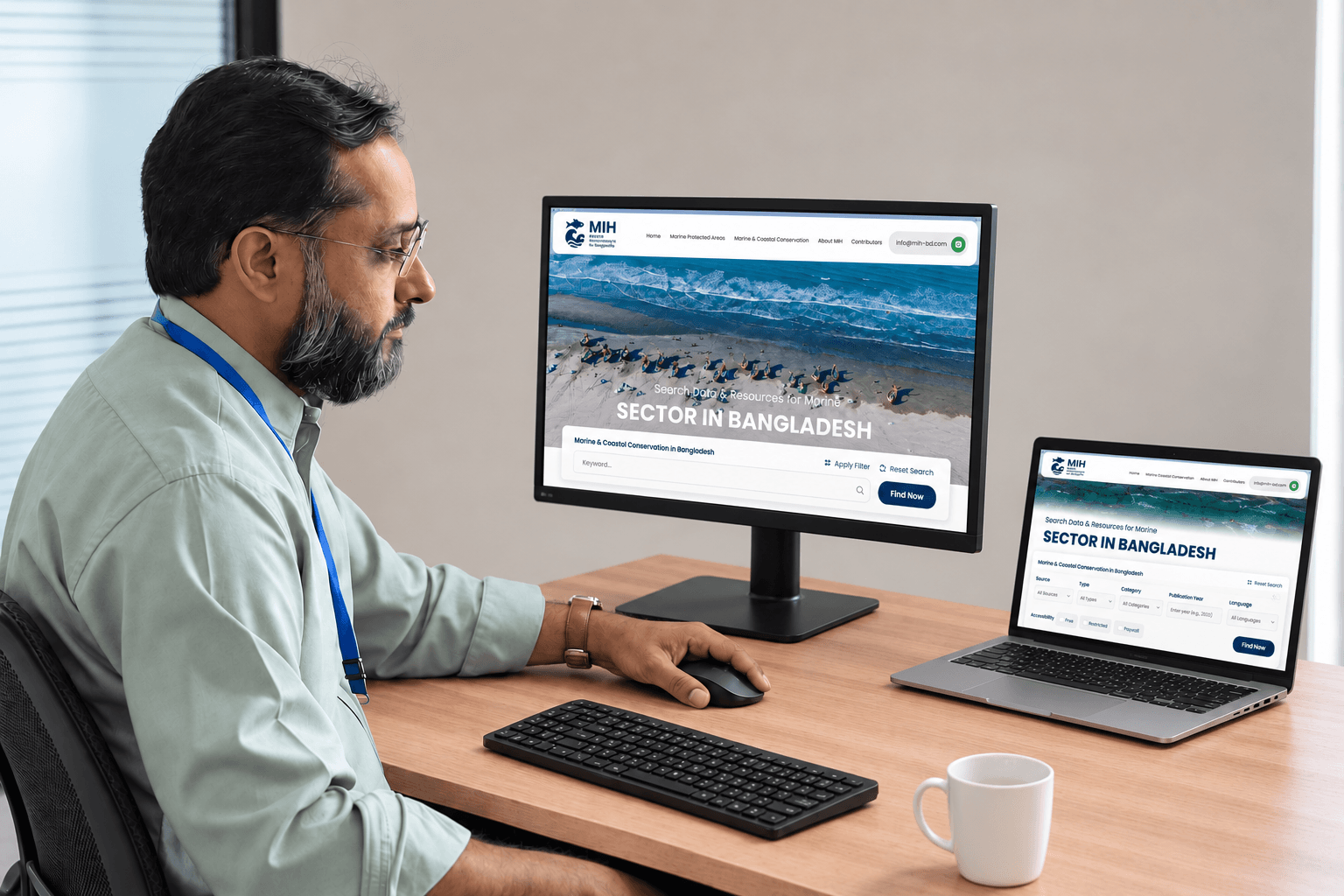
The Northern Bay of Bengal is an important marine area for Bangladesh and is linked to the livelihoods of over 13 million Bangladeshis. The region includes Marine Protected Areas and other marine resources managed by institutions including the Bangladesh Forest Department and Department of Fisheries. At the same time, marine information was spread across different organizations, systems, documents and other sources, making it difficult to find and use.
The Marine Information Hub was structured for GIZ as a central online starting point for marine-related information. Rather than moving source datasets into one system, the hub organizes information and links so users can discover resources held by the respective institutions and data owners.
The work combined environmental information management, stakeholder consultation and web development. Information was collected and reviewed with stakeholders, while the development team worked on the content structure, website functionality and workflows required to manage the information.
The information work included resources from the following departments:
- Department of Fisheries
- Bangladesh Institute of Maritime Research and Development (BIMRAD)
- Bangladesh Forest Department
- GIZ project resources and documentation
The Challenge
The main issue was that marine information was available, but it was not organized in one place.
Previous attempts had been made to establish a marine information platform, but it had not gained widespread adoption among stakeholders. There was no trusted central point that organizations regularly used to discover and access marine information across different sources.

Reports, datasets and other marine knowledge were stored across separate systems and offline records. Users often had to rely on general internet searches, personal networks or their own organization's information sources.
Collecting information for a new platform also proved difficult. Different organizations had their own internal policies and approval processes, and some stakeholders were cautious about sharing information because of concerns around ownership, visibility and control.
There was also a technical challenge: the platform needed to handle different categories of marine information through appropriate content types and user roles rather than relying only on standard website pages.
Project Transformation
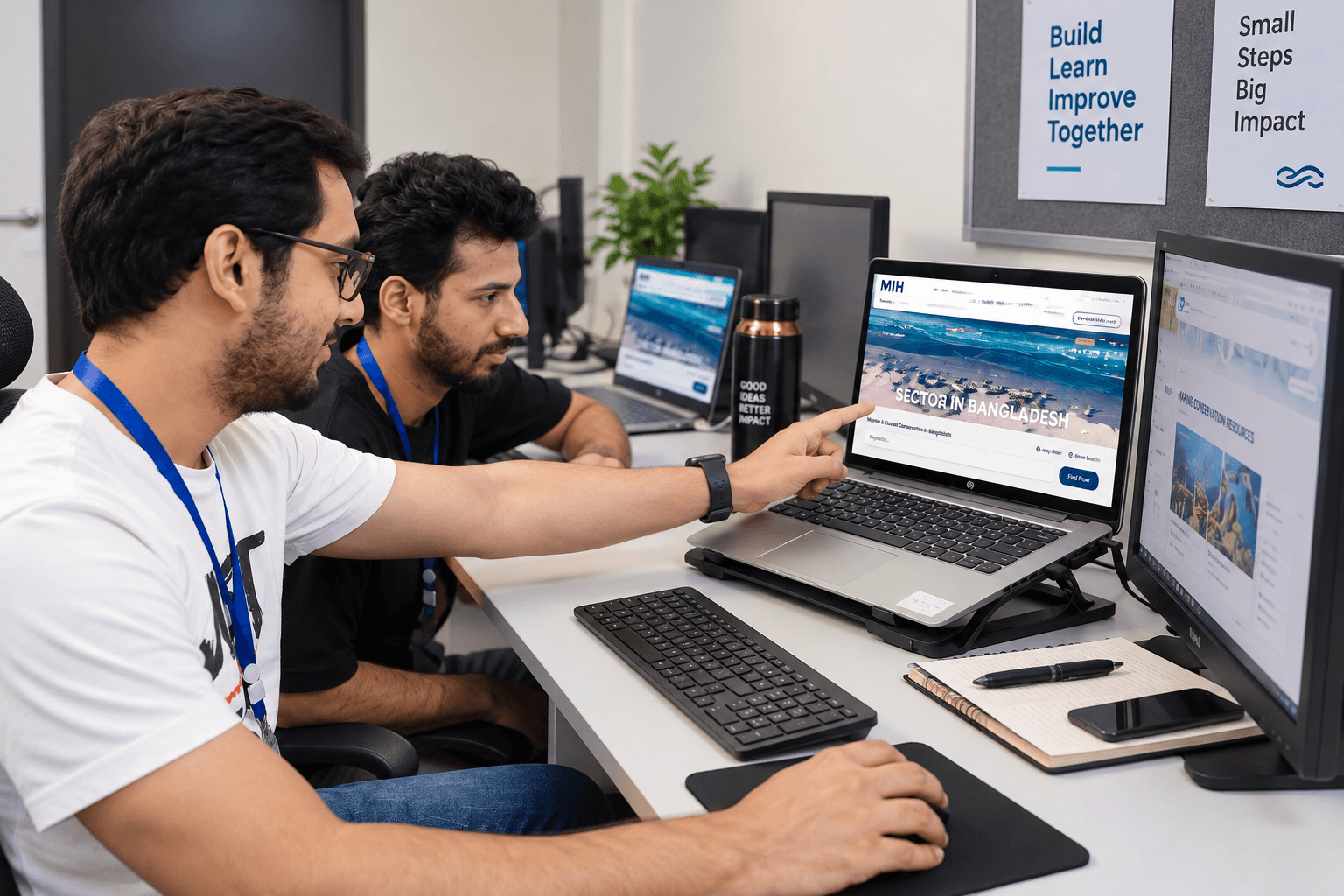
The structure of the Marine Information Hub was refined as the team learned more about the information being managed by different stakeholders.
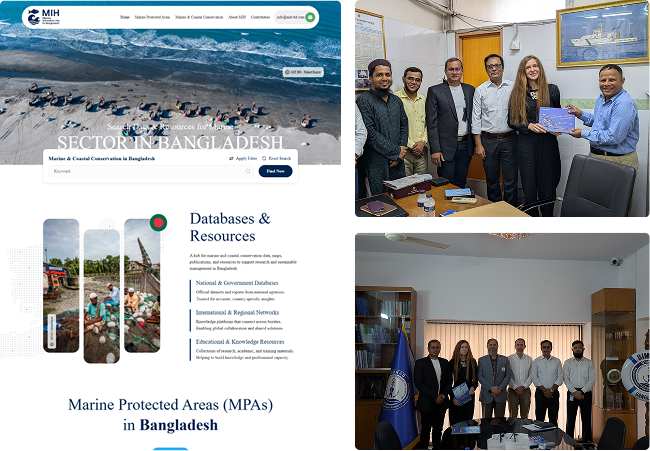
Direct discussions with government agencies, technical experts and conservation stakeholders helped identify the types of information they use, how that information is currently managed and what they expected from a central information hub.
The information structure was adjusted based on stakeholder feedback instead of simply following the initial concept. Discussions with the Department of Fisheries, Forest Department and BIMRAD helped refine the content, navigation and categorization.
On the development side, the team reviewed requirements and reference websites, discussed the website flow internally and then implemented the agreed functionality step by step.
Some requirements remained unclear during development. The team continued working with the information available and clarified many of the remaining points during an onsite information-gathering workshop. That workshop significantly improved the team's understanding of the requirements.
Technology Wisdom's Approach
The project required the environmental and technical sides of the work to stay connected.
Environmental information management focused on stakeholder communication, collecting and validating information, mapping existing resources, and helping the IT team organize the data structure and content framework. This assessment also supported the identification of data gaps and needs and informed recommendations for future marine data collection and governance.
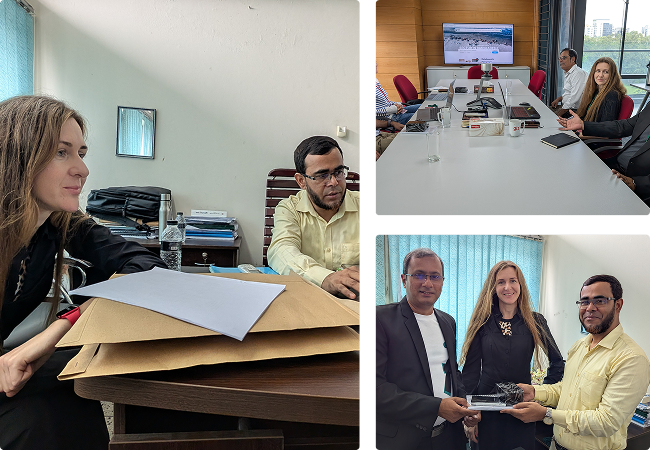
The development team focused on turning that structure into a working website. This included defining dynamic content types, implementing the content management system, developing the approval and notification workflows, and adding search and information discovery features.
The practical approach was:
- Understanding the information and requirements first
- Consulting stakeholders about the information they manage and use
- Mapping information gaps and needs and developing recommendations for further data collection, standardization and governance
- Defining the content structure and website flow
- Developing the dynamic content types and core modules
- Testing the functionality and incorporating feedback
- Deploying the completed platform to the live environment
Stakeholder coordination remained one of the main challenges throughout the project. Information collection took longer than expected because of follow-ups, approvals and delayed responses.
Solutions Delivered
Central Access to Marine Information
The Marine Information Hub brings together references to marine-related information that was previously distributed across different institutions, documents, datasets and sources.
The result is a single online place where users can discover and access marine-related resources through structured information and links to the original sources, without requiring the underlying datasets to be moved into the hub.
Structured Content Management
The platform uses dynamic content types to handle different categories of marine information.
This was one of the main technical requirements because the information being managed was varied. A clearer content structure also makes it easier to add and manage information from different institutions.
Search and Information Discovery
Search and information discovery features were included so that users can find relevant marine-related content within the platform.
The environmental information work also focused on making documents, datasets and other resources easier to locate.
Data Gap & Future Data Recommendations
Beyond the web platform, the project included data gap and needs analysis based on the assessment of existing marine information, along with recommendations for future data collection, standardization, quality assurance and data governance.
Contributor and Moderation Workflow
The website includes functionality for contributors to submit articles and for moderators to review and approve them.
Moderator notifications support the submission and review process before content is published.
Content Access Management
The platform supports public, paid and restricted articles, providing different access options for different types of content.
Responsive Web Platform
The website was developed as a responsive platform for desktop and mobile users. The development technologies were WordPress, PHP, HTML, CSS, JavaScript and Bootstrap.
Project Highlights
- Multiple Institutional Sources
- Central Information Discovery & Access
- Dynamic Content Structure
- Stakeholder-Led Refinement
- Contributor and Moderation Workflow
- Live Deployment
Outcomes
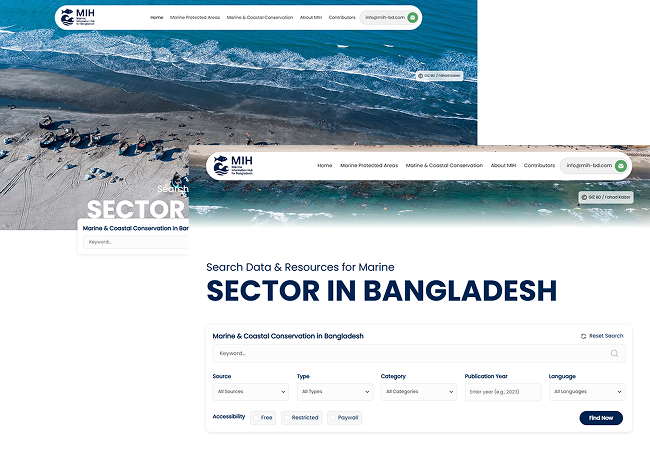
The main outcome was the establishment of a central online hub where users can discover and access marine-related information through structured listings and links to the original sources, rather than searching across multiple websites.
The project also made relevant documents, datasets and resources easier to locate and created a clearer structure for adding and managing information from different institutions.
From the development side, the completed website included the requested content management, search, article submission, moderation, notification and content-access functionality.
Lessons from the Project
Stakeholder engagement turned out to be one of the most important parts of the work.
Some information requirements and gaps only became clear through direct discussions with stakeholders. At the same time, stakeholder availability and approval processes affected the pace of information collection.
For similar projects, the team would start detailed stakeholder workshops earlier and provide a clearer data-collection guide covering required fields, formats, examples and data-quality requirements.
On the technical side, defining the website flow and content structure early helped reduce confusion and made implementation more straightforward.
The main lesson from the project was that content planning, stakeholder engagement and technical development need to be considered together when building a platform involving information from multiple organizations.
Founder Perspective
“The Marine Information Hub shows that solving an information challenge is about more than building a website. We first needed to understand how marine information was managed across stakeholders, then translate those needs into a practical structure for discovering resources and identifying gaps. The platform provides a foundation for better access today and more consistent data practices in the future.”
— Muhammad Faisal Nisar, Founder & CEO, Technology Wisdom
From Information Access to Better Data Practice
Marine information is most useful when people can find it, understand where it comes from and use it appropriately.
The Marine Information Hub creates a central starting point for discovering marine information while keeping source datasets and access arrangements with their respective institutions and data owners.
The project also went beyond the website itself, using the mapping and assessment of existing resources to support data-gap and needs analysis and recommendations for future marine data collection, standardization, quality assurance and governance.
Together, the platform and the wider information-management work provide a foundation for more connected, discoverable and consistently managed marine information.
The MIH can be expanded as information, stakeholder needs and future data practices develop further.
Looking to Build a Digital Platform for Complex, Multi-Stakeholder Information?Technology Wisdom combines web development with information structuring and stakeholder-focused implementation to build practical digital platforms for organizations managing complex information.
Our Impact
0+
Years in Business
0+
Years of Collective Experience
0+
Projects Delivered
0+
Clients Worldwide
0%
Client Satisfaction