
Project Facts
Client: GIZ (Deutsche Gesellschaft für Internationale Zusammenarbeit GmbH)
Programme: Crisis Prevention through the Promotion of the Cultural Sector in Chad
Country: Chad
Duration: December 2025 – May 2026
Sector: International Development | Cultural & Creative Industries | Employment Promotion
Services Provided
- Evidence Base for Future Investments
- Labour Market Assessment
- Mixed-Methods Research
- Stakeholder Consultation
- Economic Opportunity Assessment
- Cultural & Creative Industries Mapping
- Strategic Recommendations
- Final Reporting & Validation Workshop
Geographic Coverage
Technology Wisdom conducted field research across four strategically selected cities in Chad:
- N'Djamena
- Bongor
- Moundou
- Pala/Léré
Research Framework & Tools
The project combined internationally recognised research methodologies with context-specific field engagement to ensure reliable and actionable findings.
These include:
- Documentary Review
- Comparative City Analysis
- Value Chain Assessment
- Stakeholder Mapping
Research Tools
- KoboToolbox Surveys
- Key Informant Interviews (KIIs)
- Focus Group Discussions (FGDs)
- Semi-Structured Interviews
- Participatory Consultation Workshops
- Validation Sessions
Research by the Numbers
- 4 – Target cities assessed
- 123 – Youth surveyed
- 47 – Key Informant Interviews
- 12 – Focus Group Discussions
- Around 80 – FGD participants
- Hundreds of cultural and media stakeholders represented through qualitative and quantitative research
Related Sustainable Development Goals (SDGs)
- SDG 8
- SDG 10
- SDG 11
- SDG 16
- SDG 17

Overview
Across many fragile contexts, young people possess remarkable creativity, entrepreneurial ambition, and cultural talent. However, these strengths often remain disconnected from sustainable economic opportunities due to weak market systems, limited institutional support, and insufficient investment in creative industries.
Recognising both the challenge and the opportunity, GIZ commissioned Technology Wisdom to undertake a comprehensive decision-support study exploring high-potential economic opportunities within Chad's cultural and media sectors.
The assignment formed a critical component of the Crisis Prevention through the Promotion of the Cultural Sector in Chad programme. Rather than viewing culture solely as artistic expression, the programme recognised the cultural and creative industries as a powerful driver of employment, entrepreneurship, social cohesion, and conflict prevention. The strategic assessment would provide the empirical foundation required to design Output 3 of the programme, which focuses on strengthening youth entrepreneurship in the cultural and media sectors.
The study combined rigorous field research, labour market analysis, stakeholder engagement, and strategic recommendations to provide GIZ with a reliable evidence base for future programme implementation.
The Challenge
Chad's cultural and creative industries possess significant untapped potential. Across music, visual arts, digital media, performing arts, audiovisual production and related professions, thousands of young people demonstrate creativity and entrepreneurial spirit. Yet the ecosystem supporting these sectors remains underdeveloped.
Limited financing opportunities, insufficient vocational training, fragmented market structures, weak business support services, and the absence of reliable labour market information have constrained the sector's growth.
Additionally, without a reliable evidence base, future investments in cultural entrepreneurship risked targeting the wrong professions, overlooking regional differences, and failing to create sustainable employment opportunities.

At the same time, Chad continues to face complex social and economic challenges. In many regions, unemployment, limited livelihood opportunities and fragile governance structures increase the vulnerability of young people to exclusion, migration and conflict. Recognising these realities, GIZ sought to strengthen economic resilience by supporting cultural and media entrepreneurship as a pathway towards both employment and social cohesion.
However, designing effective interventions required robust evidence.
The programme needed answers to critical questions:
- Which cultural and media professions demonstrate genuine economic potential?
- Which value chains offer realistic opportunities for youth entrepreneurship?
- What skills gaps prevent young people from entering these professions?
- Which training institutions already exist?
- How should beneficiaries be selected?
- Which business incubation and entrepreneurship models are most appropriate for Chad's context?
- How can women, people with disabilities, refugees and other marginalised groups be meaningfully included?
Without reliable baseline information, future investments would risk addressing assumptions rather than actual market needs.
For this study, Technology Wisdom was therefore engaged to bridge this information gap through a comprehensive baseline assessment grounded in field evidence and stakeholder participation.

Technology Wisdom's Approach
This assignment was approached as more than a traditional research exercise. The objective was to generate practical intelligence capable of informing programme design, policy decisions, and long-term investments in Chad's cultural economy.
The project commenced with an extensive desk review examining national development strategies, labour market studies, entrepreneurship initiatives, donor programmes, vocational training systems, and existing documentation relating to cultural and creative industries. This preliminary assessment established an analytical foundation while identifying information gaps requiring primary research.
Building upon this review, the team designed a comprehensive research framework integrating qualitative and quantitative data collection. Research instruments were carefully adapted to the local context while ensuring consistency across all four target cities.
Fieldwork was conducted through close collaboration with local authorities, youth organisations, entrepreneurs, media professionals, civil society organisations, training institutions and community representatives. This participatory approach enabled Technology Wisdom to capture perspectives from across the cultural and creative ecosystem rather than relying on a single stakeholder group.
Special emphasis was placed on gender equality, youth inclusion and accessibility for vulnerable populations. Throughout the assignment, the research methodology ensured that women, unemployed youth, refugees, returnees and people with disabilities were represented within the consultation process, reflecting the programme's commitment to inclusive development.
Rather than merely documenting challenges, Technology Wisdom focused on identifying practical opportunities capable of supporting entrepreneurship, employment creation and sustainable economic development
Solution Delivered
The assignment resulted in a comprehensive evidence base supported by practical recommendations for future programme implementation.
The assignment included:
Comprehensive Desk Review
A detailed assessment of national policies, labour market dynamics, entrepreneurship initiatives, vocational education systems, and cultural sector documentation established the contextual foundation for the study.
Research Design
The team developed a robust methodological framework integrating documentary review, surveys, Key Informant Interviews, Focus Group Discussions and comparative city analysis. The methodology ensured both statistical reliability and contextual understanding.
Extensive Field Research
Primary data collection was conducted across N'Djamena, Bongor, Moundou and Pala/Léré, engaging youth, entrepreneurs, creative professionals, media organisations, civil society actors, training institutions and local authorities.
Labour Market & Value Chain Assessment
The study mapped high-potential professions throughout the cultural and media value chain, identifying both core creative occupations and complementary support services capable of generating employment opportunities for young people.
Evidence-Based Strategic Recommendations
Based upon the research findings, the study involved practical recommendations covering beneficiary selection, vocational training priorities, entrepreneurship support mechanisms, partnership models, incubation approaches and implementation strategies to guide Output 3 of the GIZ programme.
Validation & Knowledge Transfer
Research findings were presented to GIZ and project stakeholders through a structured validation process, ensuring that recommendations reflected both empirical evidence and stakeholder priorities before finalisation.

Baseline Labour Market Assessment
One of the study's primary objectives was to establish a reliable understanding of Chad's cultural and media labour market—an area where structured evidence had previously been limited. Rather than relying solely on secondary sources, Technology Wisdom combined documentary research with extensive field engagement to build a realistic picture of the sector's current state and future potential.
The assessment examined labour market trends, existing cultural enterprises, vocational training opportunities, entrepreneurship ecosystems, and the value chains supporting creative industries across four target cities. The study explored both established professions—such as artists, performers, musicians, journalists, and content creators—and supporting occupations including graphic designers, event managers, stage technicians, electricians, digital media specialists, and other complementary services that contribute to the broader creative economy.
The findings demonstrated that cultural and media professions extend far beyond artistic expression. When supported by appropriate skills development, entrepreneurship training, financing mechanisms, and market access, these sectors can become significant contributors to local economic development while creating meaningful employment opportunities for young people.
Importantly, the research also identified regional variations across the four cities, highlighting that each location possessed unique strengths, challenges, and market dynamics. This evidence allows future interventions to be tailored to local contexts rather than applying a single implementation model nationwide.

Stakeholder Engagement & Field Research
We believe that meaningful development solutions begin with listening to the people they are intended to serve. For this reason, stakeholder engagement formed the foundation of the assignment.
Using a participatory and inclusive research approach, the team engaged a diverse range of actors representing the cultural and creative ecosystem. These included youth organisations, artists, entrepreneurs, media professionals, vocational training institutions, civil society organisations, local authorities, business support organisations, and community representatives.
The study combined 47 Key Informant Interviews, 12 Focus Group Discussions, and a quantitative survey involving 123 young respondents, ensuring that the final recommendations reflected both statistical evidence and lived experiences gathered directly from communities. The participatory methodology also ensured the inclusion of women, young entrepreneurs, vulnerable populations, and people with disabilities, aligning with the programme's commitment to inclusive development.
Beyond collecting information, these consultations created opportunities for dialogue among stakeholders who often operate independently. The process helped validate emerging findings, identify shared priorities, and strengthen local ownership of the study's recommendations.
Cultural & Creative Industries Mapping
A key outcome of the assignment was the comprehensive mapping of Chad's cultural and creative industries and the economic value chains supporting them.
The outcome of the study involved identification of existing businesses, creative initiatives, training centres, cultural organisations, media institutions, and entrepreneurship support structures operating within the four target cities. The mapping exercise revealed both established industries and emerging sectors with strong growth potential.
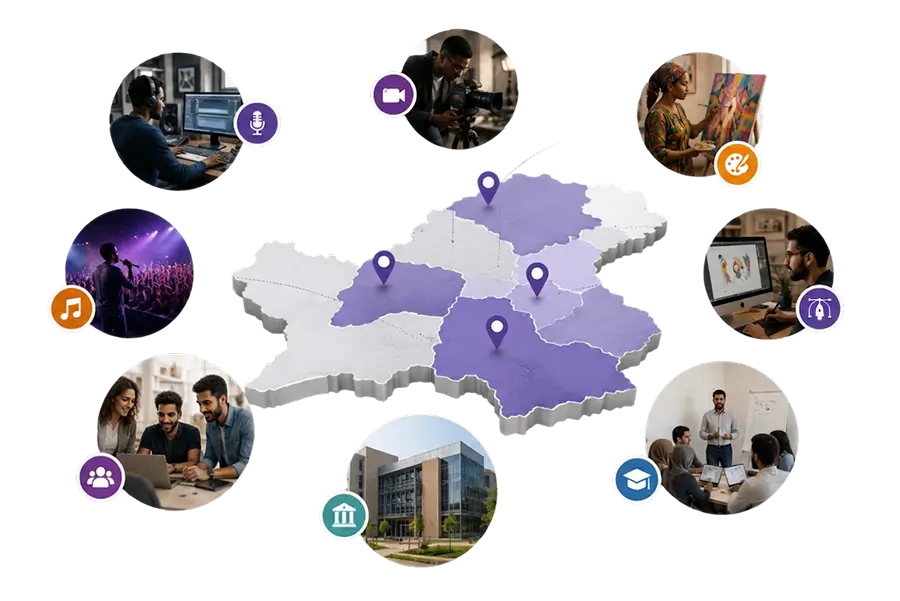
The study also assessed the availability of training programmes, existing technical capacities, market demand, and barriers to entry for young entrepreneurs. By analysing how creative products and services move through local value chains—from production and technical support to marketing and distribution—the team identified opportunities where targeted investments could generate sustainable economic impact.
This ecosystem mapping provides GIZ with an evidence-based foundation for designing interventions that strengthen the entire entrepreneurial environment rather than supporting isolated activities.

Economic Opportunity Analysis
While creative talent exists throughout Chad, the study found that talent alone is insufficient to create sustainable livelihoods. Young people consistently identified limited access to finance, weak business development services, inadequate technical training, and restricted market access as major obstacles preventing them from transforming creative skills into viable enterprises.
At the same time, the research confirmed substantial optimism regarding the future of the creative economy. A significant majority of respondents recognised the economic potential of cultural and media-related professions, demonstrating that youth entrepreneurship can become an important driver of local development when supported through appropriate policies and investments. Survey findings also highlighted access to funding as one of the most significant barriers facing aspiring entrepreneurs.
Rather than focusing solely on existing occupations, the study analysed future opportunities emerging from digital transformation, media production, event management, creative services, and cultural entrepreneurship. This forward-looking perspective enables programme partners to invest in professions with strong long-term growth potential rather than short-term employment solutions.
Strategic Recommendations
Drawing upon extensive field evidence and stakeholder consultations, the study produced a series of strategic recommendations designed to guide the implementation of Output 3 of the GIZ programme.
The study recommended prioritising vocational training programmes that respond directly to labour market demand while strengthening entrepreneurial skills among young creatives. It also proposed establishing partnerships between vocational training centres, civil society organisations, private sector actors, and local authorities.
Recognising that financial constraints remain one of the greatest barriers to enterprise development, the study further recommended strengthening business incubation, mentorship programmes, entrepreneurship coaching, and market linkage initiatives capable of supporting young people beyond initial training.

The research also emphasised the importance of transparent beneficiary selection criteria to ensure that programme resources reach individuals with genuine entrepreneurial potential while maintaining strong representation of women, vulnerable groups, refugees, returnees, and people with disabilities.
Finally, Technology Wisdom recommended adopting flexible implementation models that reflect the unique economic realities of each target city, allowing interventions to respond to local opportunities rather than applying a uniform national approach. These recommendations directly support GIZ's objective of transforming cultural participation into sustainable economic opportunity and social resilience.

Project Outcomes & Impact
Although the assignment focused on research rather than infrastructure or technology implementation, its long-term impact extends well beyond the completion of a baseline report.
The study was the first structured evidence base that achieved:
- Mapping of the CCI ecosystem
- Identification of investment priorities
- Supported the design of GIZ Output 3
- Informed future vocational training programmes
- Informed entrepreneurship support programmes
The study established the first comprehensive evidence base required to guide investments in cultural and media entrepreneurship across the programme's target cities. By identifying high-potential professions, mapping labour market dynamics, assessing training systems, and evaluating entrepreneurship ecosystems, Technology Wisdom provided GIZ with practical intelligence to support informed decision-making.
Rather than relying on assumptions, future programme activities can now be designed using evidence collected directly from communities, institutions, and market actors. This significantly reduces implementation risk while increasing the likelihood that investments will generate sustainable employment opportunities for young people.
The study also strengthened collaboration among local stakeholders by creating opportunities for dialogue, validating priorities, and encouraging shared ownership of future interventions. Most importantly, it demonstrated that cultural and creative industries represent not only a source of artistic expression but also a powerful vehicle for economic inclusion, peacebuilding, and community resilience.
Why This Study Was Different
Development programmes succeed when interventions respond to evidence rather than assumptions. Technology Wisdom approached this assignment with that principle at its core.
Rather than delivering a conventional research report, the team produced a practical decision-making framework capable of informing policy, programme design, and future investment. Every recommendation emerged from a combination of documentary analysis, quantitative evidence, qualitative insights, and extensive stakeholder consultation.

The study balanced international research standards with local knowledge, ensuring that recommendations remained both technically robust and contextually relevant. By integrating economic analysis, labour market assessment, stakeholder engagement, and inclusive research practices, Technology Wisdom transformed complex field data into actionable guidance for one of Chad's most promising emerging sectors.

Who Benefitted?
The findings support multiple stakeholders, including:
- GIZ programme teams
- Government institutions
- Local authorities
- Cultural organisations
- Youth entrepreneurs
- Vocational training providers
- Development partners
Founder Perspective
“Strong development programmes are built on evidence—not assumptions. This project demonstrates how careful research, meaningful stakeholder engagement, and practical recommendations can shape future investments that create real opportunities for communities. We are proud to contribute not only through technology, but through research that enables better decisions.”
— Muhammad Faisal Nisar, CEO, Technology Wisdom
Planning a Baseline Study or Development Research Initiative?
Technology Wisdom partners with governments, development agencies, NGOs, and international organisations to deliver research, digital transformation, monitoring systems, and evidence-based advisory services that support informed decision-making and measurable impact.
Let's discuss your next development programme.Our Impact
-
0+
Years in Business
-
0+
Years of Collective Experience
-
0+
Projects Delivered
-
0+
Clients Worldwide
-
0%
Client Satisfaction