
The main difference between SEO and CRO is their goal. SEO aims to get visitors from search engines. On the other hand, CRO aims to turn those visitors into customers.
Both of these strategies are essential for an online marketing plan. They solve problems in a digital search domain. Search Engine Optimization helps companies show up higher in search results and get visitors. Conversion Rate Optimization is about making those visitors do what you want like buy something or sign up. Understanding how they both work together is key. It helps you get visitors and do better in business. SEO brings in traffic. CRO turns that traffic into results.
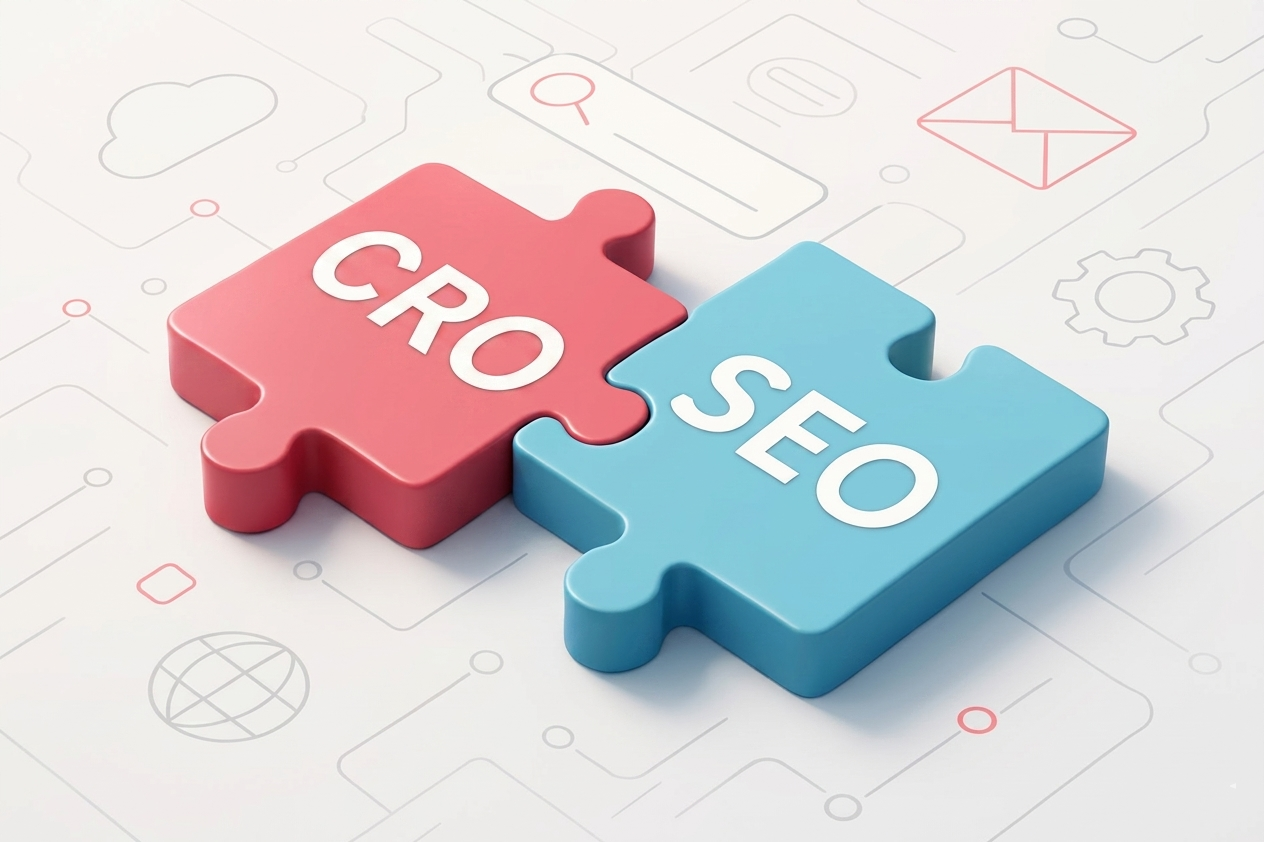
Table of Contents
show
What Is SEO?
Search Engine Optimisation or SEO is about making a website. This helps it show up often in search engines and get more visitors who found it naturally. Its goal is to get rankings for keywords that make sense. This way people searching for things like products, services or information can find it. It helps your product appear to them. It is all about being visible, in search results and attracting the audience. Effective SEO improves organic search rankings, strengthens domain authority, and increases long-term search results.
SEO typically means:
- Keyword research and targeting
- On page SEO optimisation
- Technical SEO enhancements
- Content optimization
- Internal linking strategies.
- Authority and Trust Building
- Organic search rankings on Search Engine Results Pages (SERPs) like Google
Good search engine optimization will really help your website do better in search results. It will make your website more important. People will be able to find it for a long time.
This is because SEO is very important for reach so that it will make your website show up higher in search results. In other words, it increases visibility of your site. Companies that put money into SEO want higher Google rankings, higher keyword rankings and more qualified traffic from the search engines.
What Is CRO?
Conversion Rate Optimisation (CRO) is the process of getting more of your website visitors to do what you want.
Such action might be:
- Purchasing something
- Filling out a contact form
- Schedule a consultation
- Download a resource
- Subscribe to the newsletter
It is all about improving your conversion funnel by using data-driven testing and analysing how your users behave.
Typical CRO activities include:
- Landing page optimization
- User Experience optimization
- CTA optimization
- Form optimization
- A/B testing.
- Session recording and heatmap analytics
Let us pick one important component of this digital marketing strategy which is: “Landing Page Optimization”. This strategy focuses on ensuring that visitors arriving on key landing pages take meaningful actions. In other words, it is not about driving more traffic, it’s about making better business out of the existing traffic.
SEO vs. CRO: What’s the distinction?
| Factor | SEO | CRO |
| Primary Goal | Increase organic traffic | Increase conversions |
| Main Focus | Search rankings | Visitor actions and outcomes |
| Primary Metric | Organic traffic, rankings, impressions | Conversion rate, revenue, leads |
| Timeline to Results | Typically 3–12 months | Often weeks to months |
| Cost Structure | Content, technical improvements, authority building | Testing, design improvements, analytics |
| Common Tools | Google Search Console, Ahrefs, SEMrush | Hotjar, Microsoft Clarity, Optimizely |
| Required Skillset | Technical SEO, and content strategy | UX design, psychology, analytics, experimentation |
The easy way to think about SEO vs CRO is like this:
SEO brings traffic to your site. When they arrive CRO convinces them to do something.
SEO vs CRO Metrics Comparison
SEO KPIs – Performance Indicators
Your SEO is working when you see metrics like visibility and traffic.
Key KPIs for SEO are:
- Natural traffic
- Search impression
- Click through rate (CTR)
- Conversion to Organic
- Authority Domain
- SERP rankings
These signs can tell you if your digital marketing strategies and associated efforts are helping your online presence.
CRO KPIs – Performance metrics
CRO is about user behaviour and conversion performance.
Main CRO KPIs are:
- Conversion rate
- Average value of order (AOV)
- Bounce rate
- Form fill rate
- Income from visitors
- Rate of lead generation
- Cart abandonment rate
- Engagement stats (per post)
These metrics tell you how well your site converts visitors into customers.
In this regard, it is important to mention that the User Experience Optimization is a critical aspect of CRO. A website may receive significant traffic through SEO, but poor navigation, confusing interfaces, or slow page interactions can prevent visitors from converting.
SEO vs CRO: Which Should You Prioritise First
The answer is it depends on where you are right now.
If your website is not getting much traffic, the first thing you should do is usually do SEO. A foundation for future growth is to improve search visibility and attract qualified visitors. As it involves organic search rankings which refer to the natural or unpaid positions your website holds on Search Engine Results Pages (SERPs) like Amazon, so it can be made a first and foremost target to achieve.
If your site already has consistent traffic but struggles to convert that traffic into leads or sales, then CRO typically provides faster wins. The more you convert the more revenue you get without more traffic.
A good rule to remember:
- Low traffic = focus on seo.
- High traffic, low conversions = focus on CRO.
- Invest in SEO + CRO together = growing businesses.
Does CRO affect SEO rankings?
No, CRO is not a direct ranking factor.
But typically, CRO improvements improve user experience, page engagement and content relevance. These improvements can indirectly affect SEO performance by offering a better user interaction experience with your website.
How SEO and CRO Work Together?
The best digital marketing strategies don’t isolate these two digital marketing strategies.
The first strategy brings qualified traffic from the search engines and the second one makes that traffic do something of value.
This synergy between them can create a growth loop, where traffic and conversion performance feed off each other. Here CTA Optimization plays an important role. CRO specialists evaluate the placement, design, wording and visibility of calls-to-action throughout the website. Even small improvements to CTA buttons, forms, or messaging can significantly impact lead generation and sales performance. In short, they both go well together in this aspect.
For example:
- Visitors go to a landing page, driven by SEO.
- CRO improves the experience of the page.
- More conversions, better business performance.
- Usually, better user satisfaction has a positive effect on the site’s overall performance.
The integration of both approaches delivers a higher ROI than either one alone.
Matching Content to Search Intent
One of the best ways to bring SEO and CRO together is to match content up with search intent.
Imagine someone looking:
“best oil filter for Toyota Corolla”
This user is shopping around and comparing products.
Now picture someone looking:
buy oil filter for Toyota Corolla online
This search shows purchase intent. Both users are looking for oil filters, but want different content experiences. SEO recognises the intent behind the query. CRO makes sure the page has the right call to action, information and conversion path.
When content matches user intent, we see better rankings and better conversions.
Case Study: Why Amazon Ranks & Converts Well
Amazon is one of the best examples of CRO and SEO working together.
The SEO advantages of Amazon are:
- Comprehensive keyword coverage
- High domain authority
- User-generated content
What’s so great about Amazon from a CRO perspective is:
- Simple check out
- Excellent product photography
- Social Proof and Reviews
- Customised recommendations
- Optimised placement of CTAs
Amazon wins because it doesn’t choose SEO or CRO, it builds them into the whole customer journey.
How to Blend SEO and CRO: 5 Action Steps
- Map Keywords to Goals of Conversion
Match target keywords with business goals and conversion opportunities
- Landing Pages with Search Intent Optimisation
Ensure the content is as expected when a user clicks through from the search results.
- Refine Call to Actions
Use clear, persuasive CTAs to guide users to the next step.
- Run A/B Tests
Test headlines, layouts, forms, CTA placements often to improve performance.
- Measure SEO and CRO Collectively
Track organic traffic and conversion metrics to get the complete view of your marketing efforts.
SEO Tools vs. CRO Tools
| SEO Tools | CRO Tools |
| Google Search Console | Hotjar |
| Google Analytics | Microsoft Clarity |
| Ahrefs | Optimizely |
| SEMrush | VWO |
| Screaming Frog | Crazy Egg |
| Surfer SEO | Unbounce |
- SEO tools are focused on SERP rankings, and technical performance.
- CRO tools are focused on user behaviour, experimentation and optimisation of conversion funnels.
Together they give a holistic view of how a website is performing.
The New AI Search Optimisation Position:
Search experiences powered by AI are transforming the relationship between these two marketing strategies. Today’s SEO is made up of:
- AI search optimization
- Answer engine optimization
- ChatGPT search visibility strategies
- AI Summaries Optimisation
With users getting answers directly in search results more and more, businesses need to consider how AI Overviews impact traffic and conversions from a conversion perspective.
Organisations that can adapt content for traditional search engines and AI-powered discovery platforms will be better positioned for visibility and performance in the future.
FAQs-Frequently Asked Questions:
Can you deploy SEO and CRO campaigns simultaneously?
Yes. In fact, running SEO and CRO together often produces the strongest results because traffic growth and conversion improvements support each other.
Which has a faster ROI, SEO or CRO?
Conversion Rate Optimization usually gives us results because it works on making the most of the people who are already visiting our website. Search Engine Optimization takes a bit longer. It helps our website grow in a way that lasts for a long time.
Share this post:


You May Also Like
we are the best company giving services of UI UX designing, web developing or SEO since 2001.