
An SEO myth is an outdated or incorrect belief about search ranking factors, often based on practices that worked years ago but no longer apply. Some of these myths have been debunked for a decade and still show up in client briefs. Others are newer, born out of confusion around AI search, LLMs, and generative results. This guide breaks them down by category: classic myths that refuse to die, AI era misunderstandings, technical SEO misconceptions, and how to tell the difference between a real ranking factor and something someone read on a forum in 2011.
Table of Contents
show
Classic SEO Myths Still Circulating
Myth: Keyword Density Determines Rankings
The myth: Hit a certain percentage of keyword usage on a page, usually cited as 2–3%, and you will rank higher.
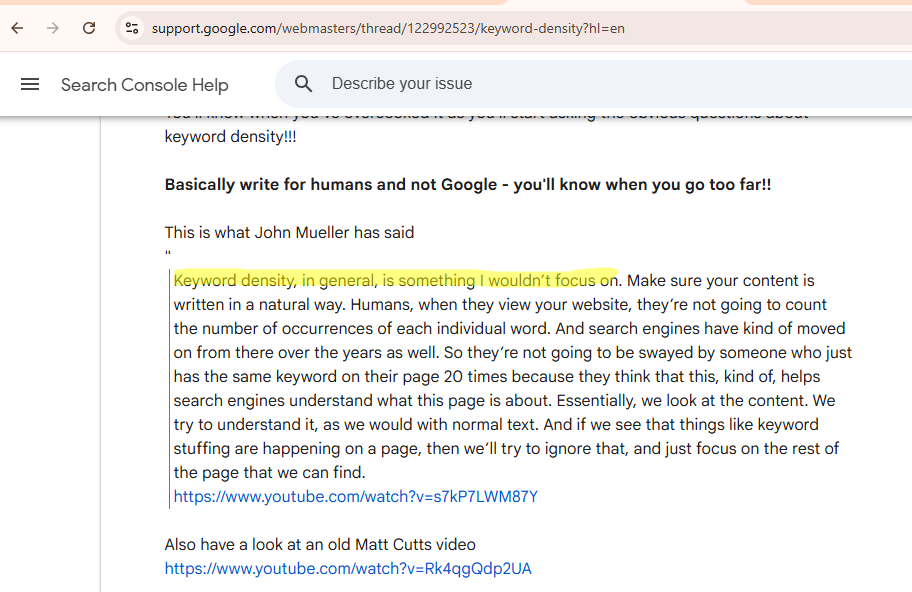
The fact: Keyword density is not a Google ranking factor. It never officially was. Google’s algorithms understand context, synonyms, and intent. Stuffing a keyword into every third sentence does not signal relevance, it signals keyword stuffing, which can actually trigger a quality penalty. Google’s John Mueller has said explicitly that keyword density is not something they look at.
Source: https://support.google.com/webmasters/thread/122992523/keyword-density
What to do instead: Write naturally. Use your target keyword where it fits, in the title, the H1, the opening paragraph, and a few times throughout. Focus on covering the topic thoroughly. Semantic variations and related terms matter more than hitting a number.
Myth: Meta Keywords Tag Affects SEO
The myth: Adding keywords to the Meta keywords tag helps Google understand what your page is about.
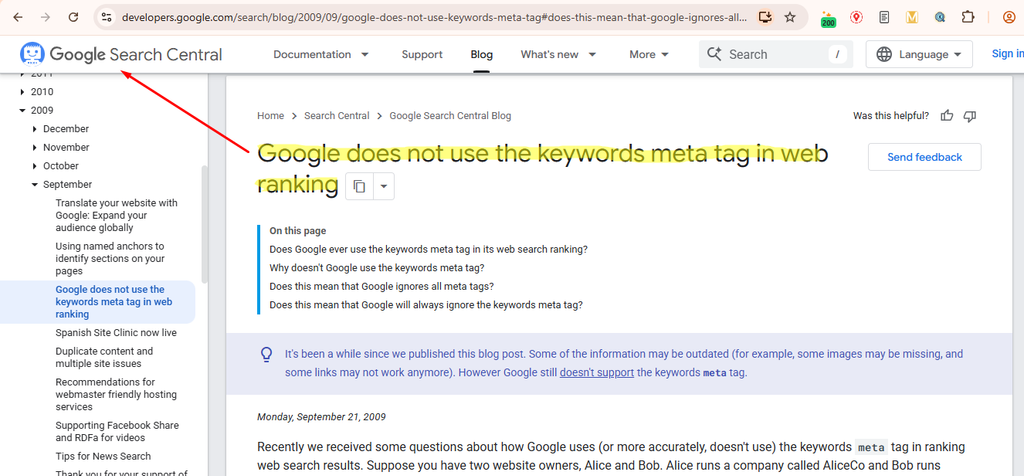
The fact: Google stopped using the Meta keywords tag in 2009. They announced it publicly. Bing ignores it too. The only search engine that still uses it is Yandex, and only in a limited way. Spending time on Meta keywords in 2026 is wasted effort.
Source: https://developers.google.com/search/blog/2009/09/google-does-not-use-keywords-meta-tag
What to do instead: Focus on your Meta title and Meta description. These do not directly boost rankings, but a well-written Meta description improves click-through rate, which does send positive signals.
Myth: More Backlinks Always Mean Better Rankings
The myth: The more backlinks you have, the higher you rank. Link building is a numbers game.
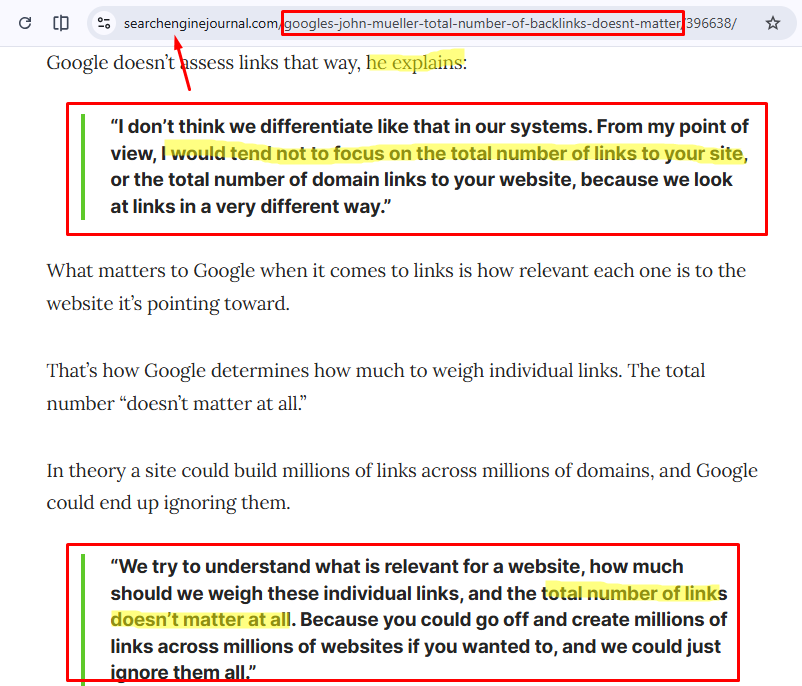
The fact: Backlink quality beats backlink quantity every time. One link from a trusted, relevant, high-authority site does more than 500 links from spammy directories. Google’s Penguin update (now built into the core algorithm) was specifically designed to penalize manipulative link building. A large backlink profile full of low-quality links can actively hurt your rankings.
What to do instead: Earn links from relevant, authoritative sites in your niche. Focus on content that people genuinely want to reference, original research, useful tools, in-depth guides. Quality over volume, always.
Myth: Exact Match Domains Guarantee Rankings
The myth: Buying a domain that exactly matches your target keyword, like bestvpnservice.com, gives you a built-in ranking advantage.
The fact: Google’s EMD (Exact Match Domain) update in 2012 specifically targeted thin sites using exact match domains to game rankings. A domain name is a weak signal at best. A keyword in your domain will not save you if your content, backlinks, and authority are weak. Exact match domains can still rank but only because of the same factors that make any site rank.
Source: https://www.digitalleverage.ch/en/blog/study-exact-match-domains
What to do instead: Pick a domain that is brand able, memorable, and easy to type. Build authority through content and links. Your domain name is not a ranking shortcut.
Myth: Google Sandbox Suppresses All New Sites
The myth: Google deliberately sandboxes new websites for 3–6 months, preventing them from ranking no matter how well the content is.
The fact: Google has never confirmed a sandbox exists. What is actually happening is that new sites have no backlinks, no crawl history, no brand signals, and no trust built up. Of course, they take time to rank, not because of a penalty, but because they have not earned the signals, that ranking requires yet. Some new sites rank quickly when they produce genuinely useful content with even a handful of good links.
Source: https://mangools.com/blog/google-sandbox/
What to do instead: Do not wait for a sandbox timer to expire. Publish quality content, build a few legitimate links, get your technical SEO right, and let Google’s signals accumulate naturally.
Myth: Each Page Should Target Only One Keyword
The myth: Every page should be built around a single keyword. Targeting more than one cause’s keyword cannibalization.
The fact: Google ranks pages for hundreds of keywords simultaneously. A well-written page on “content marketing strategy” will naturally rank for “content strategy,” “content marketing tips,” “how to build a content strategy,” and dozens of related variations. The real cannibalization risk is when two separate pages on your site compete for the same primary intent — not when one page ranks for multiple related terms.
What to do instead: Target a primary keyword and a cluster of semantically related terms on each page. Think about the topic, not just the keyword. Build pages that fully cover a subject rather than artificially narrowing scope.
Myth: Social Shares Directly Improve Rankings
The myth: If your content is shared on Twitter, LinkedIn, or Facebook, your rankings go up.
The fact: Google has said multiple times that social signals are not a direct ranking factor. They do not count social shares as links or use like counts as authority signals. What social media does do is amplify content, which can lead to more people discovering it, linking to it, and searching for your brand. That is indirect, not direct.
What to do instead: Use social media to distribute content and build an audience. The benefit to SEO comes through increased visibility and the links that sometimes follow, not from the shares themselves.
Myth: SEO Results Show Up Overnight
The myth: Publish optimized content today, rank tomorrow.
The fact: SEO is a long game. New content needs to be crawled, indexed, and evaluated by Google, which can take days to weeks. Then rankings fluctuate as Google assesses how users interact with the page. Competitive rankings do not happen overnight, they are built up over months of steady work. Page one guarantees in 24–48 hours are either aimed at zero-traffic keywords or just not honest.
Source: https://monstrousmediagroup.com/blog/the-myth-of-overnight-seo-success-what-theyre-not-telling-you
What to do instead: Think in quarters, not days. Keep publishing, keep building links, and let the effort compound. SEO rewards consistency more than any single tactic.
Myth: More Pages Always Mean Better SEO
The myth: The more pages your site has, the more traffic you will get. More content equals more rankings.
The fact: Thin content, duplicate content, and pages with no search demand actively hurt your site. Google’s Helpful Content Update specifically targeted sites that produce large volumes of low-quality pages. A site with 50 genuinely useful, well-written pages will outperform a site with 5,000 thin ones. Content quantity without quality is a liability, not an asset.
Source: https://youtu.be/gKoriHae71w
What to do instead: Audit your existing content before adding more. Remove or consolidate thin pages. Focus on creating pages that fully address real search intent, fewer, better pages beat more, weaker ones.
AI Search Era Myths
Myth: SEO Is Dead Because of AI Overviews and ChatGPT
The myth: Why would anyone visit a website when ChatGPT or Google’s AI just answers the question on the spot? SEO has nowhere left to go.
The fact: SEO did not die, it evolved. AI Overviews take up more space on informational searches, but they have not replaced clicks for commercial, navigational, or research queries. People still click through. They compare products, book services, read full guides, and check sources. What is actually changed is the bar. Generic content struggles. Sites with real expertise, clear writing, and original insight are the ones winning right now.
Source: https://developers.google.com/search/docs/appearance/ai-features#how-ai-features-work
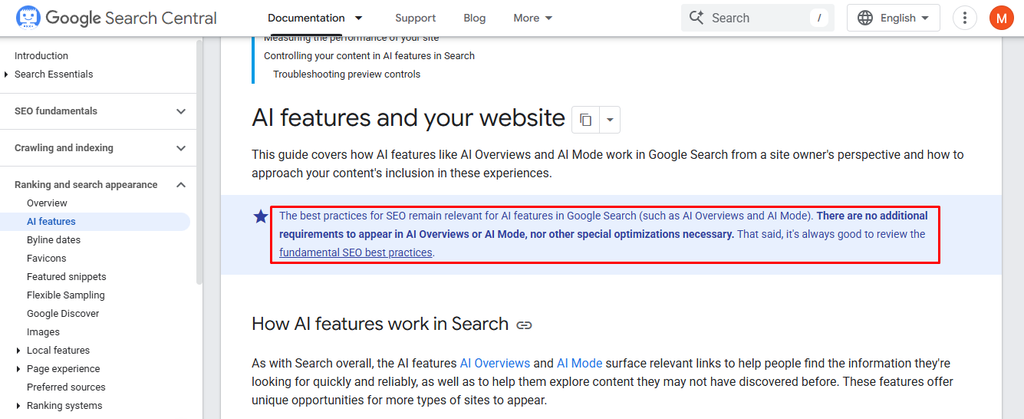
What to do instead: Optimize for AI citation alongside traditional rankings. Write with clear definitions, structured headings, and authoritative sourcing. Being cited in an AI Overview is a new form of visibility and it is worth optimizing for.
Myth: LLMs Are Independent Search Engines
The myth: ChatGPT, Claude, and Gemini operate in their own lane, nothing to do with Google or SEO. Optimizing for search will not change what these AI tools say about your brand or content.
The fact: LLMs are not search engines in the traditional sense, they do not crawl the web in real time (mostly). Their outputs are based on training data, which was largely sourced from the web. The content that ranked well, were linked to, and was widely cited online is the content that influenced LLM training. In other words, traditional SEO signals, quality content, authoritative backlinks, and topical depth influence what LLMs “know” and reference. Perplexity and Bing AI do crawl in near real-time, making current SEO directly relevant.
Source: https://tarasaka.com/llms-txt-vs-normal-seo-for-ai-overviews/
What to do instead: Do not treat LLM visibility as something entirely separate from SEO. Build authoritative, well-structured content. The same signals that help you rank on Google help you are cited by AI.
Myth: GEO Replaces Traditional SEO
The myth: Generative Engine Optimization (GEO) is a completely new discipline that replaces SEO. You have to choose one or the other.
The fact: GEO is an extension of SEO, not a replacement. The fundamentals of earning visibility in AI-generated results, authoritative content, clear structure, trustworthy sourcing, and technical accessibility are the same fundamentals that drive traditional SEO. The tactics shift at the edges: definition-first writing, structured data, and AI crawler access in robots.txt. However, the foundation is identical.
Source: https://www.seroundtable.com/google-generative-ai-search-responses-todo-41916.html
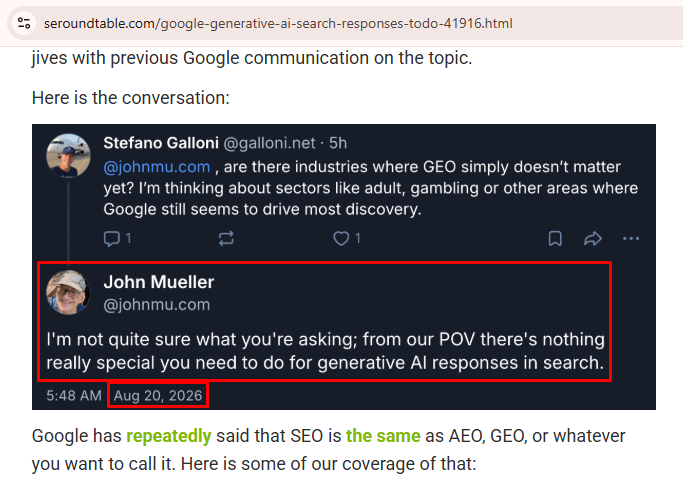
What to do instead: Add GEO considerations on top of your existing SEO strategy. Check your robots.txt for AI crawler access, structure content for answer extraction, and build topical authority. Do not abandon what works.
Myth: AI Search Doesn’t Need Technical SEO
The myth: AI search engines just read content. Technical SEO robots.txt, sitemaps, structured data does not matter for AI visibility.
The fact: Technical SEO matters just as much for AI visibility as it does for traditional search If GPTBot, ClaudeBot, or PerplexityBot are blocked in your robots.txt; your content is invisible to them — simple as that. There is also a new file emerging called llms.txt, which works like robots.txt but for LLMs, guiding them toward the content you actually want referenced. Structured data does the same job it always has helping engines understand what your content means. Get the technical access right first. Everything else depends on it.
What to do instead: Check your robots.txt first, accidental AI crawler blocks are more common than people think. Consider adding llms.txt to guide LLMs toward the content that matters most. Make sure your structured data is clean and passing validation. Technical SEO is the groundwork. Without it, none of the other visibility tactics, traditional or AI, actually land.
Myth: Word Count Is a Ranking Factor for AI Citations
The myth: AI search rewards longer content. The more words on your page, the better your chances of showing up in an AI-generated answer.
The fact: Word count does not move the needle for AI citations or Google rankings. What actually matters is topical depth, how well you answer the question. A tight 500-word page that fully covers a topic will be cited over a bloated 3,000-word page circling the same point. AI engines pull answers based on structure, clarity, and relevance. Length has nothing to do with it. Google’s Helpful Content Update made that clear when it hit sites that were padding content to hit arbitrary word counts.
What to do instead: Write as long as the topic requires and no longer. Cover the subject thoroughly with real depth, not padding. Clear headings, concise definitions, and structured answers are cited. Filler does not.
Myth: Backlinks Are Dead in the AI Search Era
The myth: AI search does not care about backlinks. Links are a legacy-ranking signal that no longer matters.
The fact: Do not write off backlinks. Google still drives the majority of search traffic globally and links remain one of its top ranking signals. There is also an AI angle, content that has been widely linked to and cited is more likely to have ended up in LLM training data and be referenced in AI outputs. Link building looks different now it is about earning real citations from authoritative sources rather than chasing numbers but the underlying value of a quality link has not changed.
What to do instead: Keep building high-quality links. Focus on earning mentions from authoritative, relevant sources the kind that signal genuine expertise. That work pays dividends in both traditional and AI search.
Technical SEO Myths
Myth: Robots.txt Blocks All Bad Bots Automatically
The myth: Adding bots to your robots.txt file with Disallow: / keeps them out completely.
The fact: Robots.txt is a request, not a lock. Well-behaved bots like Googlebot, GPTBot, and ClaudeBot respect it. Malicious scrapers, spam bots, and most bad actors ignore it entirely. A robots.txt file has zero enforcement power, it is a voluntary standard. If you are relying on robots.txt alone for security or to keep scrapers out, you are not protected.
Source: https://developers.google.com/search/docs/crawling-indexing/robots/intro
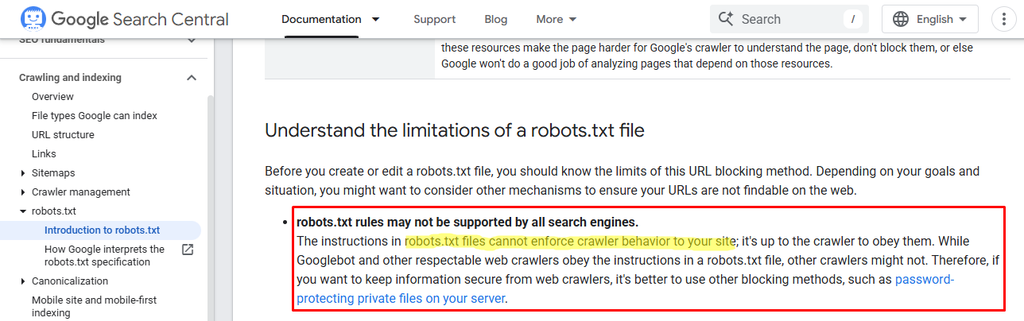
What to do instead: Robots.txt is a crawler management tool, not a security measure. Keep using it to control legitimate bot access. For actual bad actors scrapers, spam bots, malicious crawlers you need server-side rate limiting, IP blocking, CAPTCHAs, and WAF rules. Two different problems, two different solutions.
Myth: Schema Markup Guarantees Rich Results
The myth: add the right schema markup and Google automatically shows rich results for your pages ratings, FAQs, step-by-step instructions, all of it.
The fact: Schema markup makes you eligible for rich results, not entitled to them. Google looks at page quality, content relevance, and context before deciding to show anything. A technically perfect schema implementation on weak content gets you nothing. It is also worth knowing that Google removes rich result types without much warning; FAQ schema was showing up everywhere until 2023, then Google pulled it back significantly.
Source: https://developers.google.com/search/docs/appearance/structured-data/sd-policies
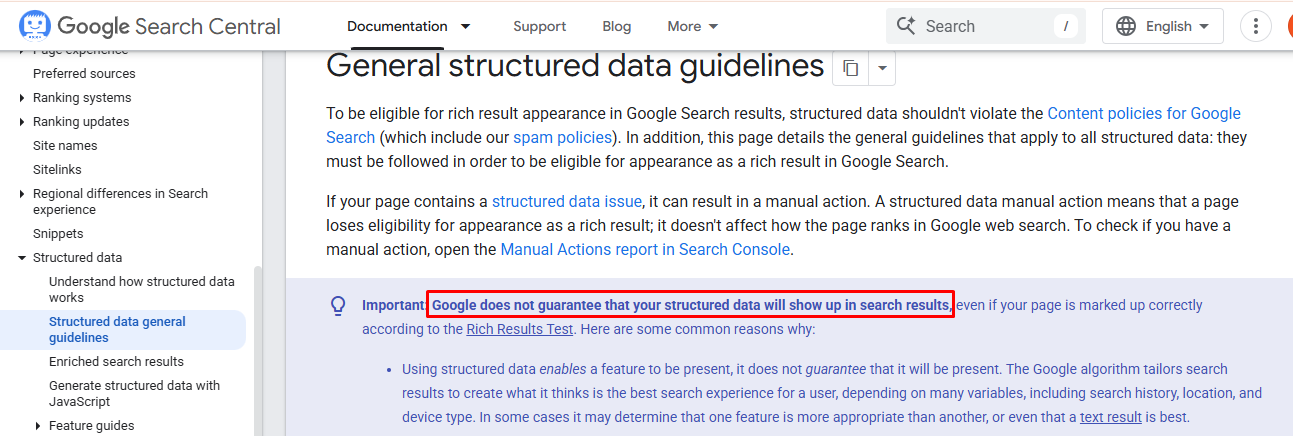
What to do instead: Implement schema correctly from the start and validate it regularly. However, treat it as a quality signal that supports your content, not a guaranteed shortcut to better SERP features.
Myth: HTTPS Alone Boosts Rankings Significantly
The myth: Switching to HTTPS gives you a meaningful ranking boost.
The fact: HTTPS is a confirmed Google ranking signal but a minor one. Google has called it a “tiebreaker.” If everything else is equal between two pages, the HTTPS version may have a slight edge. In practice, the difference is negligible. The real reason to use HTTPS is security and user trust not ranking gains.
What to do instead: Use HTTPS, but because it protects your users, not because it will move you up five positions. Focus your SEO effort on content, links, and technical health. Those signals actually move rankings.
How to Spot SEO Facts vs Myths
Checking Google’s Own Documentation
Google publishes its own guidance on what matters and what does not. Before acting on SEO advice, check it against Google Search Central documentation, Google’s Search Ranking Systems page, and statements from Google Search Liaisons like John Mueller and Danny Sullivan. If a ranking factor claim cannot be traced back to an official source or a credible, replicated study, treat it with skepticism.
A good rule of thumb: if someone says, “Google will penalize you for X” and cannot link to a source, it is probably a myth. Google is more transparent about what it values than people give it credit for.
Testing Claims against Your Own Site Data
The best way to separate SEO fact from fiction is to test it on your own site. Google Search Console, GA4, and a rank tracker give you enough data to run real experiments. Change one variable at a time update a title tag, add internal links, improve page speed and measure what shifts.
No SEO advice applies universally. What works for a large e-commerce site may not work for a local services business. Your site data is often the best source for validating SEO truths and filtering out unsupported claims about what Google reward.
Frequently Asked Questions (FAQs)
Is SEO dead in 2026?
No. SEO changed; it did not die. AI Overviews handle more queries upfront now, and zero-click search is real, but organic search still delivers meaningful traffic for commercial, navigational, and research intent. The sites winning in 2026 built topical authority, structured their content so AI engines can cite it, and kept their technical SEO airtight for both traditional and AI crawlers. Avoiding common SEO mistakes is often the difference between maintaining visibility and losing it. SEO is alive. It is just not forgiving of lazy tactics anymore.
Does keyword density still matter for SEO?
No. Google does not require a specific keyword density for ranking. Focus on topical authority, cover supporting entities, include relevant attributes, and use semantic words naturally in the content rather than targeting a particular keyword percentage.
Do I need llms.txt for AI search visibility?
No. Google explicitly says it doesn’t need llms.txt to show content in its generative AI search features, and the file neither helps nor hurts rankings there. No solid evidence shows it improves visibility on other AI platforms either, so focus on content quality, crawlability, and internal linking instead.
Share this post:


You May Also Like
we are the best company giving services of UI UX designing, web developing or SEO since 2001.